

|
Take heed to this text  |
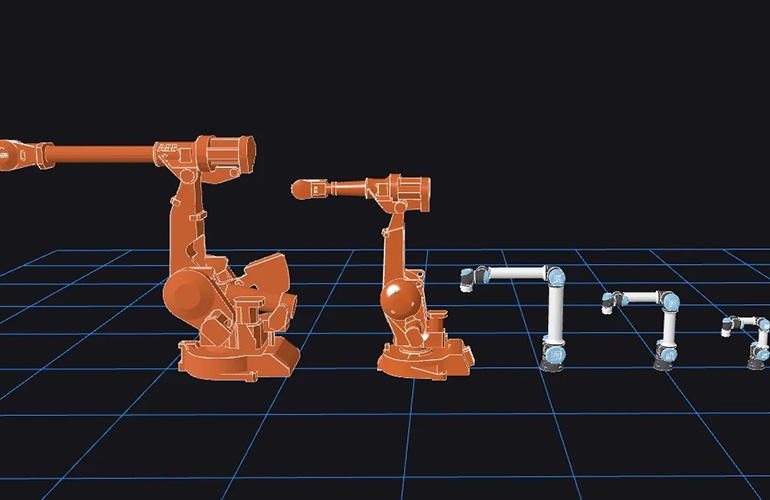
 Foxglove now provides improved help for visualizing robotic fashions described by the Unified Robotic Description Format (URDF) within the 3D panel.
Robotically fetch URDF meshes over a Foxglove WebSocket connection
When utilizing the Foxglove bridge (v0.7+) to hook up with a stay information supply, Foxglove now mechanically fetches any URDF meshes referenced by bundle:// URLs over the Foxglove WebSocket connection.
This implies you not should retailer mesh recordsdata in your native file system and cargo them with the Foxglove desktop app. Now you can merely open a WebSocket connection from the Foxglove internet app to fetch mesh recordsdata from a distant PC or an remoted setting like a Docker container.
Since mesh recordsdata can now be fetched from a distant supply like a PC or Docker container, you not want to make use of the desktop app to set the ROS_PACKAGE_PATH and retrieve mesh recordsdata saved in your native file system.
Add URDFs through a URL, subject, or parameter
Beforehand, Foxglove solely supported including URDFs as customized layers to the 3D panel utilizing URLs. Visualizing URDFs that had been accessible through a subject or parameter apart from /robot_description was not potential.
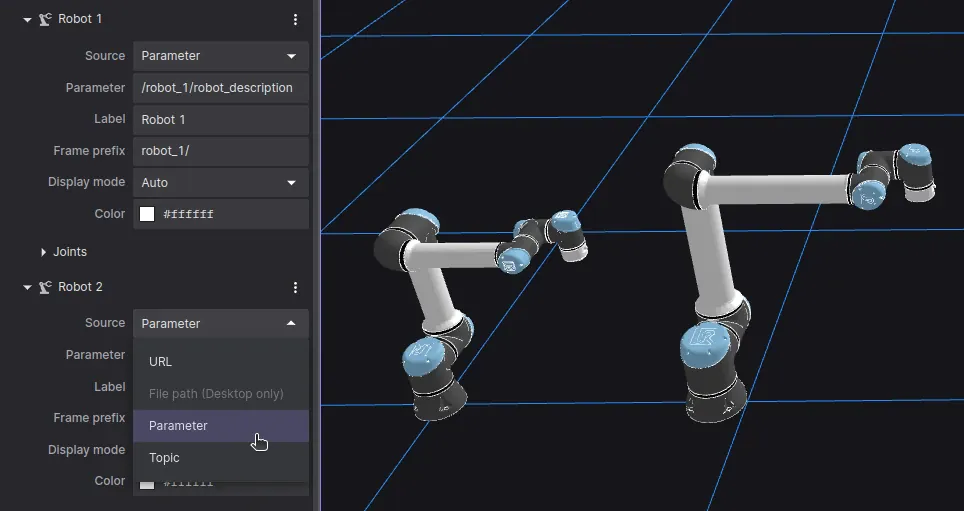
Now, now you can specify a customized “Subject” or “Parameter” because the URDF’s “Supply”. You’ll be able to even visualize a number of robots with the identical URDF, however with transforms revealed on completely different body prefixes, utilizing the “Body prefix” (i.e. tf_prefix) setting:
Visualize URDF collision geometries
The 3D panel’s “Show mode” setting permits you to swap between rendering a robotic’s “Visible” or “Collision” geometries. Deciding on “Auto” will present visible geometries by default, however will fall again to collision geometries if no visible geometries can be found.
You’ll be able to even configure the colour of the collision geometries if it isn’t specified instantly within the URDF with the brand new “Shade” setting.
Keep tuned
With this expanded URDF help, visualizing your robotic fashions within the context of a practical 3D scene will be so simple as configuring a couple of settings. Whether or not you’re utilizing Foxglove to watch a stay robotic or triage an incident, the corporate hopes these enhancements make it easier to higher perceive how your robots sense, assume, and act.

